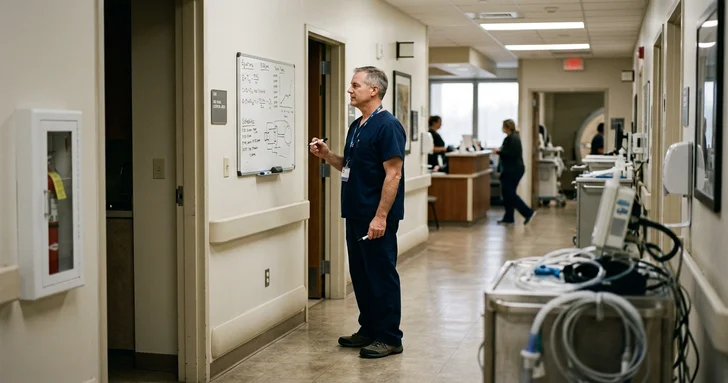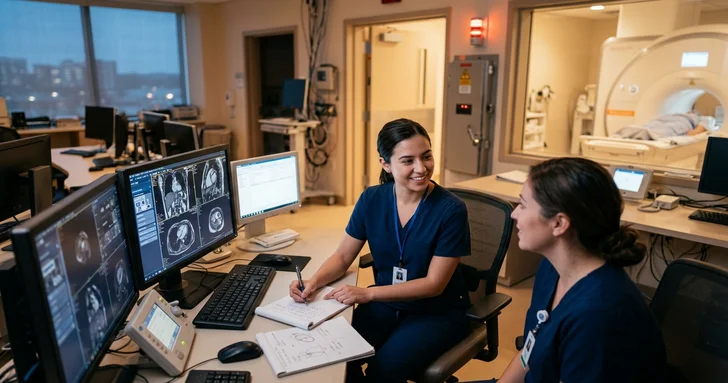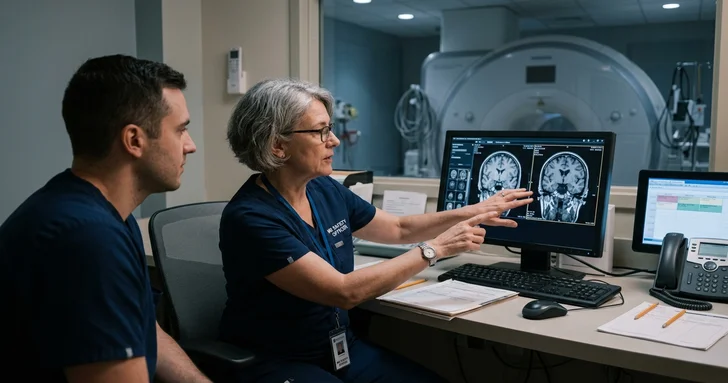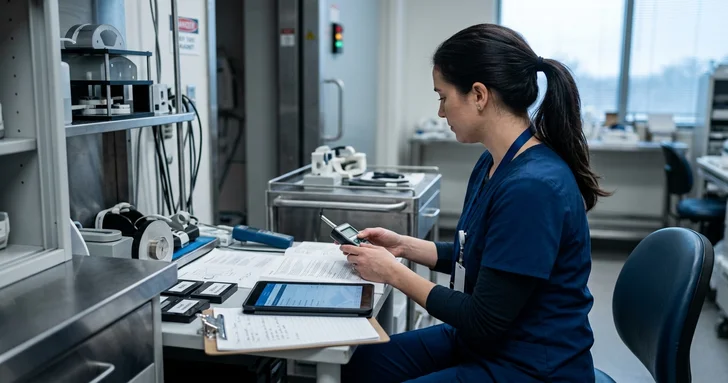








18 percent employment growth is projected for Clinical Educators. They train imaging staff on AI protocols, remote consoles, and MR safety.
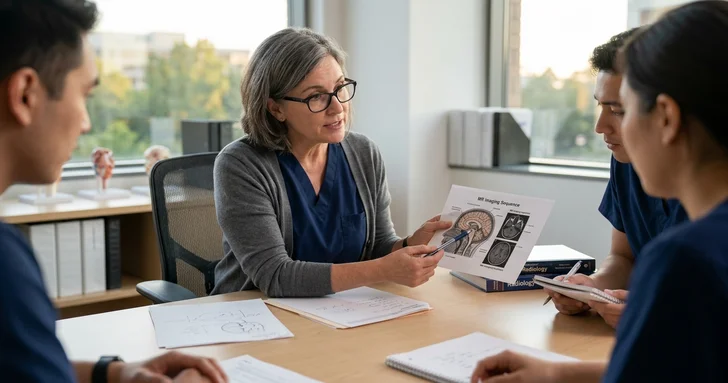
Table of contents
- Competition for jobs
- How to prepare for the future
- Skills that will matter more
- AI protocol optimization and vendor software training
- Remote console operation and virtual simulation
- Advanced implant safety and risk assessment
- Standardized competency tracking and accreditation management
- Summary: is a Clinical Educator career future-proof?
Diagnostic imaging facilities and hospital networks are upgrading to automated scanner consoles and artificial intelligence reconstruction software. Clinical educators bridge the gap between new imaging technology and daily clinical workflows by training new hires, validating staff competencies, and structuring post-primary certification pathways.
Competition for jobs
Group | Competition | Comment |
|---|---|---|
New educators (transitioning technologists) | Moderate | Candidates need strong multi-modality scanning backgrounds and formal preceptor experience to stand out. |
Experienced educators (5+ years teaching) | Low | Imaging departments face a shortage of certified leaders who can build accredited residency and training curricula. |
How to prepare for the future
Adapting your technical expertise into standardized training workflows protects your long-term value as scanner hardware and software evolve.
Master AI reconstruction workflows: Learn how deep-learning post-processing algorithms alter artifact appearance and sequence timing so you can train staff on optimal scan parameters.
Earn advanced credentials: Maintain active credentials as an ARRT MRI technologist and obtain certifications such as the Certified Radiology Administrator (CRA) or MR Safety Officer (MRSO).
Adopt remote training tools: Practice using remote console software to guide junior technologists across multi-site networks without being physically present at every scanner.
Skills that will matter more
Foundational knowledge of magnetic resonance physics remains mandatory, but educational methods have changed. Healthcare systems prioritize educators who can deploy digital simulations and manage regulatory compliance across distributed imaging teams.
Type of skill | Examples | Why it matters |
|---|---|---|
Hard (technical) | AI sequence tuning, remote scanner operations, MR safety modeling | Scanner vendors are integrating deep learning and cloud workflows directly into the acquisition console. |
Soft (social) | Instructional design, cross-functional mediation, clinical coaching | Educators must translate complex safety updates and compliance changes into simple, repeatable bedside protocols. |
AI protocol optimization and vendor software training
Modern magnetic resonance systems rely on deep-learning algorithms to reconstruct undersampled raw data into clear diagnostic scans. Clinical educators must teach technologists how to balance noise reduction with scan time reductions while preventing image smoothing artifacts.
Vendor-specific deep learning packages require structured staff orientation. Platforms like GE AIR Recon DL, Siemens Deep Resolve, and Philips SmartSpeed require technologists to adjust matrix sizes, acceleration factors, and slice thickness differently than traditional parallel imaging.
Artifact recognition under neural filtering differs from conventional image artifact correction. Educators train technologists to distinguish genuine anatomic pathology from algorithmic blurring or hallucinated patterns during rapid acquisitions.
Remote console operation and virtual simulation
Workforce shortages have led imaging centers to centralize senior expertise using virtual operating hubs. Clinical educators train technologists to operate scanner consoles over secure hospital networks.
Centralized cockpit platforms such as Siemens syngo Virtual Cockpit and Philips Collaboration Live let one experienced educator oversee multiple scanner suites simultaneously. Educators use these systems to guide junior staff through difficult anatomy positioning and contrast timing in real time.
High-fidelity scanning simulators replace non-productive training hours on live clinical machines. Software like ScanLab MR and vendor desktop simulators let students practice coil selection, gradient switching limits, and sequence adjustments before handling patients.
Advanced implant safety and risk assessment
An aging patient population has expanded the volume of MR Conditional medical devices entering scanner suites. Clinical educators set facility safety standards and train technologists to interpret implant documentation accurately.
Implant parameter matching requires staff to evaluate specific absorption rate (SAR) limits, spatial gradient maximums, and active scan time restrictions. Educators build standardized screening protocols based on guidance from the American College of Radiology.
Safety credentialing integration ensures that imaging facilities meet Joint Commission annual safety mandates. Educators lead hands-on emergency drills for quench procedures, projectile response, and RF thermal burn prevention.
Standardized competency tracking and accreditation management
Regulatory bodies require documented proof of technical and patient safety competencies for all operating technologists. Clinical educators align clinical orientation programs with credentialing standards.
Structured education pathways help radiologic technologists complete the American Registry of Radiologic Technologists post-primary clinical experience requirements. Educators review logbooks, verify clinical repetition counts, and run structured competency audits.
Curriculum management systems centralize compliance documentation for inspections by the Joint Commission and the American College of Radiology. Moving training tracking from paper files to digital platforms reduces compliance gaps during institutional audits.
Summary: is a Clinical Educator career future-proof?
Yes. Data from the U.S. Bureau of Labor Statistics projects 18 percent employment growth for postsecondary health specialties teachers through 2035, while general imaging demand continues to rise. Automated scanners cannot replace the clinical coaching, safety oversight, and hands-on skill verification that educators provide.
Tips if you want to go for it:
Establish a clinical baseline: Spend at least three to five years as a full-time ARRT MRI technologist handling diverse patient populations before pursuing education roles.
Add safety credentials: Complete the MRSO certification through the American Board of Magnetic Resonance Safety to validate your technical risk-management expertise.
Build instructional materials: Create written protocol sheets, digital training modules, and case studies to demonstrate your instructional design capability to hiring managers.
Frequently asked questions
Yes. Employment for postsecondary health specialties teachers is projected to grow 18 percent through 2035. While imaging facilities continue to adopt automated scanners and AI reconstruction, automated systems cannot replace the clinical coaching, regulatory oversight, and hands-on competency validation that educators provide.
Key technical skills include optimizing AI deep-learning reconstruction algorithms, operating remote scanner consoles across centralized networks, utilizing virtual scanning simulators, and conducting advanced MR Conditional implant safety risk assessments.
Centralized cockpit platforms allow an experienced educator to remotely oversee multiple scanner suites in real time, assisting staff with positioning and contrast timing. High-fidelity scanning simulators replace non-productive training hours on clinical machines by letting learners practice sequence adjustments and coil selection in a virtual environment.
Technologists should establish three to five years of clinical scanning experience, earn advanced certifications such as the MR Safety Officer (MRSO) or Certified Radiology Administrator (CRA), master AI reconstruction workflows, and build instructional materials like digital modules and protocol sheets.

Content manager
Erica Niklasson