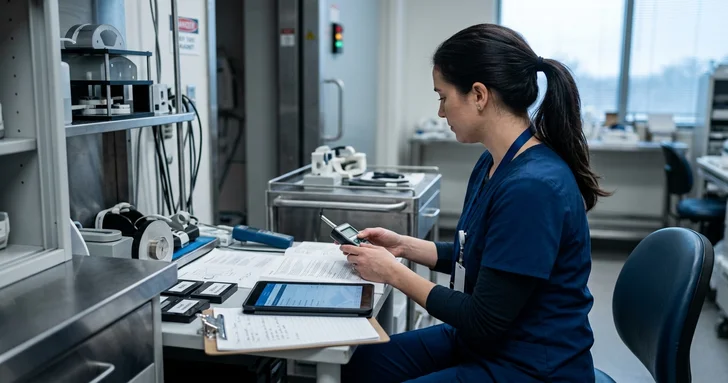







2.5 to 3 years of education, via an associate degree and certificate, prepares a cardiac MRI technologist. Median pay is $95,480 per year.
Table of contents
The Most Common Education Path
The primary route to becoming a cardiac MRI technologist is completing an associate degree in radiologic technology followed by a post-primary certificate in magnetic resonance imaging. Because the heart is a constantly moving organ, cardiac MRI demands advanced technical expertise beyond standard musculoskeletal or neuroimaging. Technologists must master vector electrocardiogram gating, respiratory navigation, and specialized pulse sequences. Consequently, clinical employers look for professionals who establish fundamental radiologic imaging skills before moving into advanced cross-sectional MRI modalities.
The first stage involves earning an Associate of Applied Science (AAS) or Associate of Science (AS) in Radiologic Technology from an accredited program, usually lasting 24 months. This curriculum covers patient care, radiation physics, medical ethics, radiographic pathology, and extensive hospital rotations. Upon completing this degree, graduates sit for the primary credentialing examination to earn the Registered Technologist in Radiography designation, known as the RT(R) credential through the American Registry of Radiologic Technologists.
The second stage consists of a 6 to 12 month post-primary certificate in magnetic resonance imaging. Students in this phase study MRI physics, gradient systems, radiofrequency coils, artifact suppression, cross-sectional anatomy, and clinical MRI protocols. During clinical rotations, candidates log the required clinical cases on active scanners to qualify for the ARRT MRI post-primary examination, earning the designation of ARRT MRI technologist. With this credential in hand, technologists train under senior cardiovascular technologists and cardiologists in dedicated hospital scanning suites to learn cardiac sequences, including cine balanced steady-state free precession (bSSFP), late gadolinium enhancement (LGE), and myocardial perfusion.
Aspect | Details |
|---|---|
Program length | 2.5 to 3 years total (2-year Associate Degree + 6 to 12-month MRI Certificate) |
Cost | $12,000 to $35,000 (community college to university certificate) |
Admission requirements | High school diploma or GED, completion of prerequisite courses (Anatomy, Physiology, Physics, Intermediate Algebra) with a minimum 2.5 to 3.0 GPA, background check, and drug screening |
Where | Loma Linda University, Mayo Clinic School of Health Sciences, Community College of Denver, California State University, Northridge |
Financing this path is accessible through standard financial aid channels. Students enrolled in accredited associate degree and certificate programs can submit the Free Application for Federal Student Aid (FAFSA) to qualify for need-based Federal Pell Grants and federal direct student loans. Active-duty military personnel and veterans can apply GI Bill benefits to cover tuition, fees, and housing stipends at participating colleges. Furthermore, many hospital systems offer tuition assistance or loan repayment programs for staff radiographers who commit to cross-training into MRI and staffing high-demand cardiac suites.
After graduating from the certificate program and completing the clinical competency log, candidates take the ARRT MRI credentialing examination. Passing this exam grants national certification. Technologists must also secure a state license if they practice in one of the states that regulate magnetic resonance imaging operators. Once credentialed, technologists transition into the cardiac scanning subspecialty through direct hospital mentorship or formal fellowship training.
Comparing All Education Paths
While the associate degree paired with a post-primary certificate remains the standard route, multiple educational avenues prepare technologists for clinical practice in cardiovascular magnetic resonance suites.
1. Associate Degree in Radiologic Technology with Post-Primary Certificate
This traditional two-step model qualifies students first in general radiography and then in magnetic resonance imaging, creating a versatile clinical skill set.
Length: 2.5 to 3 years.
Cost: $12,000 to $35,000.
Content: Radiographic positioning, radiation physics, clinical radiography rotations, followed by MRI physics, cross-sectional anatomy, cardiac gating principles, and supervised scanner practice.
Pros: Wide employment flexibility; dual-modality marketability; broad hospital eligibility.
Cons: Requires two separate admission processes and clinical placement cycles.
Example programs:
Loma Linda University (Loma Linda, CA)
Community College of Denver (Denver, CO)
Bates Technical College (Tacoma, WA)
2. Direct Primary-Pathway Associate Degree in MRI Technology
Direct entry programs train students exclusively in MRI technology from the start, bypassing general X-ray radiography coursework completely.
Length: 18 to 24 months.
Cost: $25,000 to $45,000.
Content: Fundamental anatomy and physiology, patient care, medical terminology, dedicated MRI physics, instrumentation, safety protocols, and over 1,000 hours of clinical MRI scanner rotations.
Pros: Fastest entry into MRI; no time spent learning ionizing radiation or darkroom radiography.
Cons: Technologist cannot perform X-rays or cross-cover in computed tomography; higher tuition at private technical institutes.
Example programs:
Gurnick Academy of Medical Arts (San Jose, CA)
CBD College (Los Angeles, CA)
Sacramento Ultrasound Institute (Sacramento, CA)
3. Bachelor of Science in Radiologic Sciences or Medical Imaging
A four-year bachelor's degree provides a comprehensive academic background that combines advanced cross-sectional imaging modalities with leadership and healthcare management coursework.
Length: 4 years.
Cost: $30,000 to $70,000.
Content: Advanced cardiovascular anatomy, pathology, research methodology, advanced MRI pulse sequence design, MRI safety officer standards, healthcare administration, and specialized hospital clinical rotations.
Pros: Prepares candidates directly for lead technologist, department manager, or research imaging roles; extensive cardiac scanner rotations.
Cons: Longer time commitment and higher total tuition cost.
Example programs:
Oregon Health & Science University (Portland, OR)
University of Nebraska Medical Center (Omaha, NE)
Rutgers School of Health Professions (Newark, NJ)
4. Military Medical Specialist MRI Cross-Training Pathway
Enlisted service members in medical imaging specialties can acquire radiologic and MRI credentials through the Department of Defense Medical Education and Training Campus (METC).
Length: 12 to 24 months of active service training.
Cost: $0 (funded by the United States military, with paid service salary).
Content: Military medical trauma protocols, cross-sectional anatomy, primary radiography, and secondary phase MRI practicums in military medical centers.
Pros: No student debt; rigorous clinical discipline; access to advanced military diagnostic equipment.
Cons: Requires military enlistment and active-duty service commitment.
Example programs:
Medical Education and Training Campus (METC) (Fort Sam Houston, TX)
Uniformed Services University Health Sciences (Bethesda, MD)
Specializations in Cardiac Magnetic Resonance
Specializing in distinct sub-areas of cardiovascular imaging allows an ARRT MRI technologist to focus on high-acuity patient populations, complex diagnostic indications, and advanced pulse programming. Subspecialization improves clinical autonomy and career stability within major academic medical centers and specialized cardiology practices.
Specialization | Description | Relevant Information |
|---|---|---|
Adult Congenital Heart Disease (ACHD) MRI | Imaging complex surgically altered cardiac anatomies, systemic right ventricles, and shunt flows. | Requires mastery of non-standard imaging planes, 3D whole-heart reconstruction, and flow quantification. |
Pharmacological Stress Perfusion MRI | Evaluating inducible myocardial ischemia using coronary vasodilators (regadenoson or adenosine) during dynamic contrast runs. | Involves high-risk patient monitoring, hemodynamic management, and rapid image acquisition sequences. |
Pediatric & Neonatal Cardiovascular MRI | Scanning infants and children with congenital anomalies, often requiring sedation or specialized feed-and-wrap methods. | Requires specialized small-bore coils, high heart rate gating adjustments, and pediatric life support training. |
Cardiac Implantable Device (CIED) Scanning | Performing MR examinations on patients with pacemakers, ICDs, or CRT devices under conditional parameters. | Demands detailed knowledge of SAR limits, wideband artifact suppression, and device safety workflows. |
4D Flow & Hemodynamic Quantification | Time-resolved, three-dimensional phase-contrast imaging of heart chambers and great vessels. | Focuses on volumetric blood flow analysis, wall shear stress calculations, and advanced post-processing software. |
Tissue Characterization & Parametric Mapping | Quantitative T1, T2, and extracellular volume (ECV) mapping to detect diffuse fibrosis, edema, and amyloidosis. | Involves precise region-of-interest analysis, hematocrit adjustments, and synthetic tissue color mapping. |
Adult Congenital Heart Disease (ACHD) MRI
Adult congenital heart disease MRI focuses on patients who survived childhood surgical repairs or have uncorrected complex cardiac malformations. Technologists in this discipline plan custom non-standard imaging angles to assess anomalies such as tetralogy of Fallot, transposition of the great arteries, and single ventricle Fontan circuits. The work requires visualizing reconstructed conduits, baffle pathways, and assessing ventricular volumes with high geometric accuracy.
Entry into this specialty typically occurs after gaining two to three years of general cardiac MRI experience in high-volume tertiary hospitals. Academic medical centers like Boston Children's Hospital and Texas Children's Hospital offer dedicated fellowships and advanced preceptorships. These clinical training modules usually take 6 to 12 months, with costs often covered by hiring hospital systems seeking specialized talent.
Pharmacological Stress Perfusion MRI
Stress cardiac MRI evaluates myocardial blood supply under pharmacologically induced stress to detect coronary artery disease. Technologists administer vasodilator agents such as adenosine, dipyridamole, or regadenoson, followed by a rapid intravenous bolus of gadolinium contrast. The technologist captures the first pass of the contrast agent across every heartbeat to locate areas of reduced perfusion.
Training in stress perfusion imaging requires completing institutional safety accreditations, intravenous contrast competencies, and Advanced Cardiac Life Support (ACLS) certification. Most hospital cardiology departments conduct stress training internally over three to six months for registered MRI technologists. This specialization creates strong employment opportunities in outpatient cardiovascular clinics and hospital diagnostic wings.
Pediatric & Neonatal Cardiovascular MRI
Pediatric cardiac MRI focuses on imaging complex congenital structural defects in infants and young children. Technologists must manage elevated, variable heart rates by adjusting trigger delays and acquisition windows. They work alongside pediatric anesthesiologists and cardiologists to optimize pulse sequences while minimizing examination times under anesthesia.
Technologists enter this subspecialty through specialized pediatric hospital training programs. Institutions like Cincinnati Children's Hospital Medical Center and Children's Hospital of Philadelphia host formal clinical orientation pathways. Technologists must maintain Pediatric Advanced Life Support (PALS) credentials and complete 300 to 500 hours of mentored scanning.
Cardiac Implantable Device (CIED) Scanning
Imaging patients with pacemakers, implantable cardioverter-defibrillators (ICDs), and cardiac resynchronization therapy (CRT) units requires specialized safety and imaging knowledge. Technologists verify device parameters, collaborate with cardiac device nurses to program devices into MRI safe mode, and run sequences tailored to stay within Specific Absorption Rate (SAR) boundaries.
This subspecialty is supported by specialized certificate programs like the MRSO (Magnetic Resonance Safety Officer) certification through the American Board of Magnetic Resonance Safety (ABMRS). Training includes courses in wideband sequence programming, which eliminates metal-induced dark band artifacts around ventricular leads. Hospitals prioritize hiring certified safety technologists to run dedicated CIED imaging clinics.
4D Flow & Hemodynamic Quantification
Four-dimensional flow MRI uses time-resolved, three-directional phase-contrast imaging to analyze complex blood velocity vectors within the thoracic aorta, pulmonary vasculature, and cardiac chambers. Technologists position large volumetric acquisition slabs and adjust velocity encoding (VENC) values to prevent phase aliasing while keeping scan times within clinically acceptable limits.
Preparation for 4D flow specialization involves university research collaborations, vendor-specific training modules from manufacturers like Siemens Healthineers or GE HealthCare, and continuing medical education courses from the Society for Cardiovascular Magnetic Resonance. Technologists who master these techniques frequently work in academic research suites and high-tier cardiovascular imaging programs.
Tissue Characterization & Parametric Mapping
Parametric mapping involves calculating absolute native T1, post-contrast T1, and T2 relaxation times in milliseconds to evaluate diffuse interstitial myocardial fibrosis, myocarditis, iron overload, and cardiac amyloidosis. Technologists must maintain precise scan timing after contrast injection, enter accurate patient hematocrit levels, and run automated inline reconstruction maps.
Training is integrated into modern advanced cardiovascular MRI post-primary programs and society workshops. Mastery of parametric mapping allows technologists to lead diagnostic workflows for heart failure clinics, working closely with reading physicians on specialized quantitative reporting workstations.
Supplementary Training and Certifications
Cardiac MRI technologists can build on their baseline registry credentials with focused continuing education, vendor training, and safety accreditations that support advanced clinical practice.
Society for Cardiovascular Magnetic Resonance (SCMR) Educational Modules
The Society for Cardiovascular Magnetic Resonance offers technologist-specific curricula covering cardiac scan planes, gating techniques, late enhancement timing, and congenital heart protocols.
SCMR Technologist Educational Track: Comprehensive online modules and case studies.
SCMR Annual Scientific Sessions Technologist Workshop: Hands-on console simulation and protocol optimization workshops.
Advanced MRI Safety Credentials
Operating scanners for patients with implants, surgical clips, and cardiac devices requires formal training in electromagnetic fields and radiofrequency safety.
ABMRS Certified Magnetic Resonance Safety Officer (MRSO): Validates expertise in RF heating, static field forces, and device clearance.
ASRT MRI Safety Series: Foundational safety courses for clinical technologists.
Cardiovascular Life Support & Emergency Management
Because cardiac MRI patients often have active myocardial ischemia, heart failure, or severe arrhythmias, technologists need emergency cardiac life support skills.
American Heart Association ACLS Certification: Advanced life support protocols, ECG rhythm identification, and resuscitation management.
American Heart Association PALS Certification: Pediatric advanced life support for pediatric imaging teams.
Venipuncture and Contrast Administration
Cardiac exams depend on fast, uninterrupted power-injector boluses of gadolinium and stress medications, making vascular access skills essential.
ASRT Peripheral Intravenous Insertion and Contrast Administration Module: Instruction on IV placement, extravasation management, and aseptic technique.
Hospital-based clinical IV cannulation preceptorships: Practical hands-on catheter placement check-offs.
Applying and Admission Requirements
Admission into medical imaging and MRI programs is competitive. Programs select applicants based on academic performance in basic sciences, healthcare exposure, and technical aptitude.
General Admission Requirements
Most accredited programs require candidates to submit the following documentation during the application cycle:
Proof of high school graduation or GED equivalent.
Official transcripts from all post-secondary institutions attended with a cumulative GPA of 2.8 or higher.
Documentation of 4 to 8 hours of clinical observation or job shadowing in an active MRI suite.
Completion of criminal background clearance, a 10-panel drug screen, and immunization verification (including Hepatitis B, MMR, and Varicella).
Current Basic Life Support (BLS) for Healthcare Providers certification from the American Heart Association.
Most programs also mandate specific prerequisite courses completed with a grade of "C" or better:
Human Anatomy and Physiology I & II (with laboratory components, 8 semester credits)
General College Physics or Radiographic Physics (3 to 4 semester credits)
College Algebra or Precalculus (3 semester credits)
Written Communication or English Composition (3 semester credits)
Medical Terminology (2 to 3 semester credits)
Introduction to General Psychology or Sociology (3 semester credits)
Summary of Education Paths
The table below provides a side-by-side comparison of the common educational routes available for aspiring cardiac MRI technologists.
Education Path | Length | Cost | Requirements | Best For |
|---|---|---|---|---|
AAS Radiography + MRI Certificate | 2.5 to 3 years | $12,000 to $35,000 | Prerequisite coursework, clinical job shadowing, ARRT(R) registration for certificate phase | Technologists wanting maximum job flexibility, dual credentials, and broad hospital mobility |
Direct Associate Degree in MRI | 18 to 24 months | $25,000 to $45,000 | High school diploma/GED, science prerequisites, CPR certification | Individuals focused exclusively on MRI scanning who want the fastest direct entry to the modality |
Bachelor of Science in Imaging Sciences | 4 years | $30,000 to $70,000 | University general education, high GPA in sciences, comprehensive clinical rotations | Students aiming for leadership, department management, research facilities, or university hospitals |
Military METC Training | 1 to 2 years | $0 (Funded by service) | Military enlistment, ASVAB qualification scores, physical fitness standards | Active-duty service members and veterans seeking a no-debt educational path |
When deciding on an educational route, evaluate your personal goals, budget, and timeline:
Finances: Community college radiography programs followed by hospital-sponsored MRI training provide the most cost-effective path with strong return on investment. If funding allows, four-year degrees provide broader long-term management utility.
Time: Direct associate programs in MRI technology offer the shortest timeline to entering the clinical workforce, while traditional dual-credential pathways take slightly longer but increase long-term hiring options.
Personal Career Goals: If your goal is scanning in high-volume cardiology centers or participating in academic clinical trials, a comprehensive university bachelor's degree or dual ARRT credentials in radiography and MRI will build the most versatile foundation.
Industry Context and Continuing Education
According to the Bureau of Labor Statistics, the median annual wage for magnetic resonance imaging technologists was $95,480. Demand for imaging technologists is projected to grow consistently due to an aging population, rising rates of chronic cardiovascular disease, and increased clinical reliance on non-ionizing, radiation-free diagnostic modalities.
Maintaining professional credentials requires ongoing education. Technologists certified by the American Registry of Radiologic Technologists must complete 24 Category A or A+ continuing education credits every two years. In addition, technologists must complete the ARRT Continuing Qualifications Requirements (CQR) process every 10 years to evaluate knowledge gaps and maintain clinical competency. Cardiac MRI technologists often satisfy these requirements through specialized cardiovascular imaging conferences, cardiac anatomy coursework, and advanced pulse programming seminars.
Conclusion
Becoming a cardiac MRI technologist requires structured academic training, hands-on clinical scanner experience, and specialized knowledge of cardiovascular anatomy and dynamic gating. Whether starting through a traditional radiologic technology degree or a direct-entry MRI program, developing expertise in advanced sequences, stress protocols, and MRI safety prepares technologists for essential roles in modern diagnostic cardiology.
Frequently asked questions
The primary route is earning an associate degree in radiologic technology (about 24 months) to achieve the ARRT Radiography credential, followed by a 6 to 12-month post-primary certificate in magnetic resonance imaging (MRI) and specialized hospital-based training in cardiac pulse sequences.
There are four main educational routes: 1) an Associate Degree in Radiologic Technology with a post-primary MRI certificate (2.5 to 3 years), 2) a direct primary-pathway Associate Degree in MRI Technology (18 to 24 months), 3) a Bachelor of Science in Radiologic Sciences or Medical Imaging (4 years), and 4) a military medical specialist MRI cross-training pathway through the Medical Education and Training Campus (METC).
Specializations within cardiac MRI include Adult Congenital Heart Disease (ACHD) MRI, Pharmacological Stress Perfusion MRI, Pediatric & Neonatal Cardiovascular MRI, Cardiac Implantable Electronic Device (CIED) Scanning, 4D Flow & Hemodynamic Quantification, and Tissue Characterization & Parametric Mapping.
ARRT-certified technologists must earn 24 Category A or A+ continuing education credits every two years and complete the ARRT Continuing Qualifications Requirements (CQR) process every 10 years to maintain their national credentials and clinical competency.

Content manager
Erica Niklasson