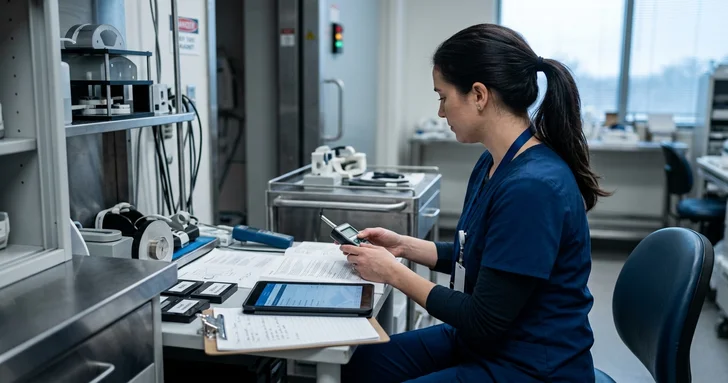








$95,480 per year is the median wage for a research MRI technologist. Entry requires an accredited 2-year degree and ARRT credentialing.
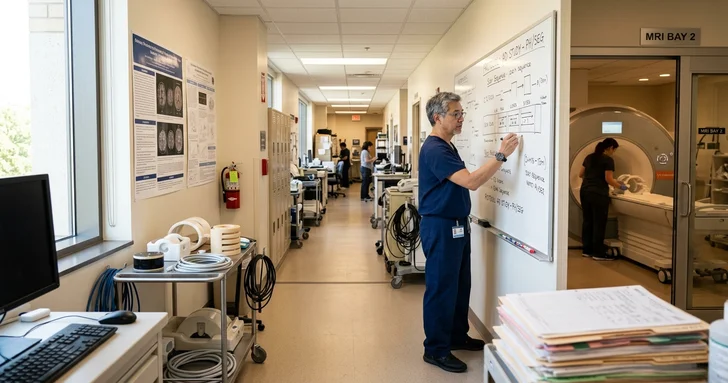
Table of contents
The primary education path
A research MRI technologist operates high-field magnetic resonance scanners to collect anatomical, functional, and spectroscopic data for clinical trials, academic studies, and neuroscience investigations. The most direct path to enter this specialized career is completing an accredited Associate of Applied Science (AAS) in Magnetic Resonance Imaging through the primary eligibility pathway recognized by the American Registry of Radiologic Technologists (ARRT).
This academic program spans 18 to 24 months of full-time study, combining classroom instruction, laboratory simulations, and clinical practicum rotations. Coursework covers cross-sectional anatomy, magnetic resonance physics, pulse sequence design, patient care, bioeffects, radiofrequency safety, and data acquisition parameters. Students complete supervised clinical hours in hospital and outpatient imaging suites to build core scanning proficiencies before transitioning into dedicated academic research environments.
Admission into an associate-level MRI program requires a high school diploma or GED equivalent, alongside prerequisite coursework in human anatomy and physiology, college algebra, physics, and English composition. Most institutions require a minimum cumulative GPA of 2.5 to 3.0 and the submission of background checks, drug screenings, and immunization records prior to clinical placement.
Tuition for an associate degree in MRI ranges between $8,000 and $35,000 depending on residency status and institution type. Students enrolled in accredited programs can access federal financial aid by completing the Free Application for Federal Student Aid (FAFSA), which opens access to Federal Pell Grants and Direct Subsidized and Unsubsidized Loans. Military veterans can utilize GI Bill benefits, and many academic medical centers offer employer tuition assistance to students working in entry-level allied health roles.
Upon graduation, candidates sit for the ARRT primary pathway examination in Magnetic Resonance Imaging. Passing the 200-question exam grants the Registered Technologist credential, allowing practitioners to practice as an ARRT MRI technologist. Depending on the state where the facility operates, technologists also apply for a state medical imaging license before joining academic imaging centers or clinical trial laboratories.
Aspect | Details |
|---|---|
Program length | 2 years (4 to 5 semesters) |
Cost | $8,000 to $35,000 total tuition |
Admission requirements | High school diploma or GED, college algebra, anatomy and physiology, physics, minimum 2.5 GPA |
Where offered | AIMS Education (Piscataway, NJ), MCPHS University (Boston, MA), Bellevue College (Bellevue, WA), Casper College (Casper, WY) |
Comparing education pathways for research MRI
Candidates can qualify for research MRI positions through several accredited academic routes, ranging from post-primary certificate tracks to comprehensive four-year university degrees.
Post-primary certificate for registered radiographers
The post-primary certificate is designed for professionals who already hold an active ARRT credential in Radiography, Nuclear Medicine Technology, or Radiation Therapy. This pathway focuses purely on magnetic resonance physics, coil selection, artifact reduction, and scan optimization. Programs generally take 9 to 12 months to complete and cost between $4,000 and $15,000.
Advantages: Shortest route to credentialing; builds on existing clinical care and anatomy foundations.
Disadvantages: Requires prior completion of an initial radiography program; competitive clinical spot allocations.
Example programs: Weber State University, Midwestern State University, University of Nebraska Medical Center.
Bachelor of Science in Medical Imaging or Radiologic Sciences
A four-year Bachelor of Science (BS) provides comprehensive training in advanced imaging modalities, research methodologies, biostatistics, and healthcare administration. These programs take 4 years (or 2 years for transfer students holding an associate degree) and range from $25,000 to $65,000. Students interested in protocol development, pulse sequence programming, and research facility management frequently select this option.
Advantages: Direct preparation for scientific literature review, study design, and advanced clinical trials; high competitiveness for university lab positions.
Disadvantages: Higher total tuition; longer timeline prior to entering the workforce.
Example programs: Rush University, Loma Linda University, University of Cincinnati.
Military radiologic technologist training
The United States Military offers medical imaging training through the Medical Education and Training Campus (METC) at Fort Sam Houston, Texas. Enlisted service members receive extensive training in diagnostic radiography followed by specialized clinical training in magnetic resonance imaging. Training lasts approximately 12 to 18 months, with full tuition coverage and paid active-duty compensation.
Advantages: Zero student debt; immediate access to advanced diagnostic scanners; housing and salary benefits during school.
Disadvantages: Requires a multi-year military service commitment; limited elective choice over initial clinical station assignments.
Example programs: Medical Education and Training Campus (METC) Radiologic Technologist Program, Defense Health Agency Training Programs.
Research MRI specializations and focus areas
Specialization allows an ARRT MRI technologist to support specialized scientific inquiries, operate high-field human and animal systems, and collaborate directly with principal investigators on investigational protocols.
Specialization | Description | Relevant information |
|---|---|---|
Functional MRI (fMRI) & Neuroimaging | Measures blood oxygen level-dependent (BOLD) signal changes during cognitive tasks or resting states. | Utilized in cognitive neuroscience, behavioral psychology, and presurgical mapping projects. |
Ultra-High-Field (UHF) MRI (7 Tesla & Above) | Operates human 7T or 9.4T research systems with heightened magnetic field strengths. | Requires specialized training in dielectric pad placement, SAR management, and high-field safety. |
Magnetic Resonance Spectroscopy (MRS) | Quantifies metabolite concentrations (NAA, choline, creatine, lactate) in vivo. | Applies to neurodegenerative research, oncology grading, and metabolic disease investigations. |
Cardiovascular MR (CMR) Research | Acquires 4D flow, myocardial perfusion, and late gadolinium enhancement datasets. | Requires precise ECG gating and respiratory compensation skills for phase-contrast imaging. |
Preclinical & Small Animal MRI | Implements micro-imaging protocols on 7T to 16.4T vertical and horizontal animal systems. | Involves rodent anesthesia handling, stereotaxic positioning, and dedicated animal care protocols. |
Quantitative MRI & Sequence Optimization | Applies T1/T2 mapping, diffusion tensor imaging (DTI), and arterial spin labeling (ASL). | Focuses on pulse sequence customization, phantom calibration, and automated image processing pipelines. |
Functional MRI (fMRI) & Neuroimaging
Functional MRI measures localized changes in blood oxygenation to evaluate brain activity during sensory tasks, motor movements, or resting states. Technologists operating in this field synchronize visual and auditory stimulus presentation hardware, configure button-response units, and interface scanner triggers with experimental recording software such as E-Prime or PsychoPy. Training is typically acquired through university imaging core facilities, specialized post-degree neuroimaging fellowships, or focused seminars offered by the International Society for MR Radiographers & Technologists (ISMRT). Candidates must hold an active ARRT registration and demonstrate proficiency in handling subjects with neurological conditions. Career opportunities are concentrated in academic medical centers, psychiatric research institutes, and university brain research centers.
Ultra-High-Field (UHF) MRI (7 Tesla & Above)
Ultra-high-field scanning utilizes 7T and 9.4T magnet systems to achieve sub-millimeter anatomical resolution and high signal-to-noise ratios. Technologists managing UHF systems must master complex radiofrequency (RF) safety protocols, manage acoustic noise mitigation, and monitor specific absorption rates (SAR) to prevent tissue heating. Training is completed on-site at major research institutions in partnership with system vendors such as Siemens Healthineers, Philips Healthcare, or GE HealthCare. Prerequisites include prior high-field 3T clinical experience and strong foundation physics. Career opportunities exist in university biomedical engineering departments and advanced neurological research centers.
Magnetic Resonance Spectroscopy (MRS)
Magnetic Resonance Spectroscopy extracts biochemical data from tissue volumes to detect cellular metabolism changes non-invasively. Technologists place single-voxel or multi-voxel chemical shift grids over regions of interest, optimize shimming algorithms, and minimize lipid contamination from adjacent tissues. Education paths include graduate coursework in medical biophysics or advanced imaging physics modules through the ISMRT. Technologists must hold a primary MRI credential and have strong understanding of chemical shift phenomena. Positions exist within oncological clinical trials, brain tumor registries, and pharmaceutical discovery centers.
Cardiovascular MR (CMR) Research
Cardiovascular MR research involves tracking cardiac morphology, myocardial strain, perfusion kinetics, and multi-directional hemodynamic blood flow. Technologists master prospective and retrospective ECG gating techniques, arrhythmia rejection algorithms, and breath-hold synchronization. Preparation requires cross-training in cardiovascular physiology alongside advanced vendor-led cardiac MRI applications courses. Technologists with CMR competencies find employment in academic cardiology departments, pharmaceutical clinical trial networks, and medical device evaluation facilities.
Preclinical & Small Animal MRI
Preclinical MRI applies extreme magnetic fields ranging from 7.0T to 16.4T to image rodent models, small organs, and synthetic materials. Technologists manage animal life-support systems, monitor core physiological temperature during long acquisitions, place surface micro-coils, and follow Institutional Animal Care and Use Committee (IACUC) regulations. Training programs are offered by research universities with dedicated comparative medicine centers. This path is open to certified technologists and biological science graduates, with careers based in biotechnology firms, university animal imaging cores, and preclinical research laboratories.
Quantitative MRI & Sequence Optimization
Quantitative MRI moves beyond subjective diagnostic images by calculating absolute physical values, such as T1 and T2 relaxation times, apparent diffusion coefficients (ADC), and cerebral blood volume. Technologists set up rigorous quality control protocols using specialized geometric and tissue-mimicking phantoms, calibrate RF transmitter gains, and run pulse sequence testing. Training involves biophysics workshops, vendor sequence development modules, and quantitative analysis seminars. Technologists work closely with MRI physicists and software engineers in scanner development facilities and research organizations.
Supplementary certifications and specialized training
Continuing professional education and cross-disciplinary safety certifications allow technologists to broaden their operational responsibilities in research centers.
Magnetic Resonance Safety Officer (MRSO) Certification
The American Board of Magnetic Resonance Safety (ABMRS) offers the MRSO credential, certifying high competency in magnetic fields, spatial field gradients, RF power deposition, implant screening, and emergency quench management. This certification provides technologists with recognized authority over research scanner safety policies.
ABMRS Magnetic Resonance Safety Officer (MRSO) Credentialing Examination
ISMRT Level 2 MR Safety Training Modules
ProScan Imaging MR Safety Officer Course Series
Good Clinical Practice (GCP) and Human Subjects Protections
Federal research compliance mandates that staff conducting research protocols on human subjects receive formal ethics and protocol-adherence training. Technologists learn federal guidelines regarding informed consent, Institutional Review Board (IRB) communication, adverse event reporting, and data integrity.
CITI Program: Human Subjects Research (HSR) and Good Clinical Practice (GCP) Courses
National Institutes of Health (NIH) Human Subjects Research Training
Association of Clinical Research Professionals (ACRP) GCP Training for Imaging Technologists
Pulse sequence design and programming
Technologists working directly on sequence customization acquire skills in sequence simulation tools and programming languages to adjust RF pulses, slice selection gradients, and readout trajectories.
Vendor Sequence Customization Courses (Siemens IDEA, GE EPIC, Philips Pulse Programming)
ISMRM Workshop on Magnetic Resonance Sequence Design and Simulation
Python and MATLAB for Biomedical Image Processing Series
Admission requirements and application process
Gaining admission into an accredited MRI program or clinical research imaging department requires systematic academic preparation and compliance verification.
Academic prerequisites
Prospective students must complete foundational science and mathematics requirements at an accredited post-secondary institution with a grade of C or higher.
Human Anatomy and Physiology I and II (with laboratory components)
College Physics (covering mechanics, electromagnetism, and wave motion)
College Algebra, Pre-Calculus, or Elementary Statistics
Written Communication and English Composition
Medical Terminology
Application procedures generally follow a three-stage sequence:
Application Submission: Submit academic transcripts, letters of recommendation, a professional resume, and an essay describing career objectives in medical imaging.
Interview and Review: Complete an interview with the program admissions committee to evaluate communication skills and understanding of magnetic resonance technology.
Clinical Clearance: Complete background checks, 10-panel drug screening, physical examination, and submit proof of immunizations (Hepatitis B, MMR, Varicella, Tdap, and current TB screening).
Summary of education pathways
The optimal education pathway depends on previous clinical experience, career objectives, and financial considerations.
Education path | Length | Cost | Requirements | Best for |
|---|---|---|---|---|
Primary Associate Degree (AAS) | 2 years | $8,000 to $35,000 | High school diploma, prerequisite math and physics | New students seeking the fastest credentialed entry into MRI |
Post-Primary Certificate | 9 to 12 months | $4,000 to $15,000 | Active ARRT registration in Radiography or Nuclear Medicine | Registered radiographers seeking to cross-train into MRI research |
Bachelor of Science (BS) | 4 years (or 2-yr transfer) | $25,000 to $65,000 | College general education, minimum GPA 2.5 to 3.0 | Students aiming for protocol management, sequence testing, or management |
Military Training (METC) | 12 to 18 months | $0 (Funded) | Military enlistment and ASVAB qualification scores | Service members seeking medical imaging careers without educational debt |
When selecting a training route, evaluate your current academic background and resources:
Finances: Community college associate programs offer low tuition rates and federal financial aid eligibility. If you already hold radiography credentials, post-primary certificates deliver direct qualification with low total credit hours.
Time: Post-primary certificate programs offer the fastest transition for active imaging staff. Direct entry high school graduates can enter the workforce within two years via an AAS degree.
Personal goals: If your long-term goal is designing research protocols, authoring scientific publications, or leading an academic imaging core, completing a Bachelor of Science provides relevant coursework in scientific writing, experimental design, and statistics.
Job outlook and career trajectory
Employment projections for magnetic resonance imaging professionals remain positive across clinical and research environments.
According to the Bureau of Labor Statistics, overall employment for radiologic and MRI technologists is projected to grow 5 percent from 2025 to 2035, faster than the average for all occupations. The Bureau of Labor Statistics OEWS reports that Magnetic Resonance Imaging Technologists earned a median annual wage of $95,480 in May 2025.
Metric | National Figure | Source |
|---|---|---|
Median Annual Wage | $95,480 | U.S. Bureau of Labor Statistics (May 2025) |
Top 10% Earning Range | > $127,670 | U.S. Bureau of Labor Statistics (May 2025) |
Projected 10-Year Growth Rate | 5% (faster than average) | U.S. Bureau of Labor Statistics (2025 to 2035) |
Maintaining an ARRT MRI technologist credential requires ongoing professional education. Technologists must earn 24 approved Category A or A+ Continuing Education (CE) credits every two years. Technologists certified after January 1, 2011, also participate in the ARRT Continuing Qualifications Requirements (CQR) process every 10 years, which includes a professional profile review and targeted self-assessment to ensure skills align with current imaging standards.
Frequently asked questions
The most direct path is completing an accredited Associate of Applied Science (AAS) in Magnetic Resonance Imaging through the primary eligibility pathway recognized by the ARRT. The program spans 18 to 24 months, combines classroom instruction with clinical practicums, and prepares graduates to take the ARRT primary pathway examination.
Candidates can choose from four main pathways: an Associate of Applied Science (AAS) degree (2 years), a post-primary certificate for already-registered radiographers (9 to 12 months), a Bachelor of Science in Medical Imaging or Radiologic Sciences (4 years), or military radiologic technologist training through the Medical Education and Training Campus (METC).
Specializations in research MRI include Functional MRI (fMRI) & Neuroimaging, Ultra-High-Field (UHF) MRI (7 Tesla & Above), Magnetic Resonance Spectroscopy (MRS), Cardiovascular MR (CMR) Research, Preclinical & Small Animal MRI, and Quantitative MRI & Sequence Optimization.
According to the U.S. Bureau of Labor Statistics, employment for radiologic and MRI technologists is projected to grow 5 percent from 2025 to 2035. Magnetic Resonance Imaging Technologists earned a median annual wage of $95,480 in May 2025, with top earners making over $127,670.
Technologists must earn 24 approved Category A or A+ Continuing Education (CE) credits every two years. In addition, technologists certified after January 1, 2011, must complete the ARRT Continuing Qualifications Requirements (CQR) process every 10 years.

Content manager
Erica Niklasson