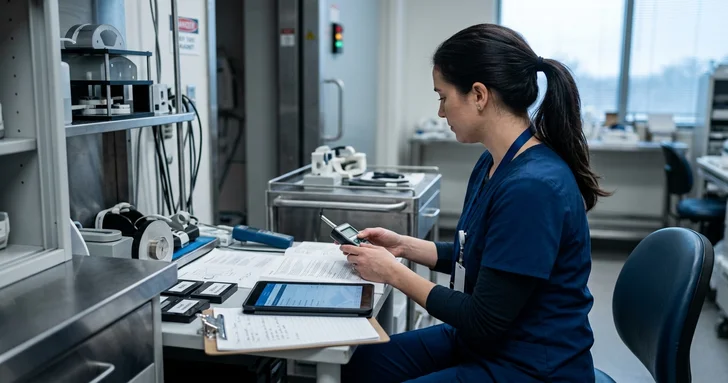








$123,860 per year is the median Imaging Manager salary ($59.55 per hour). Top earners exceed $216,750 per year, and New York pays $179,160 per year.
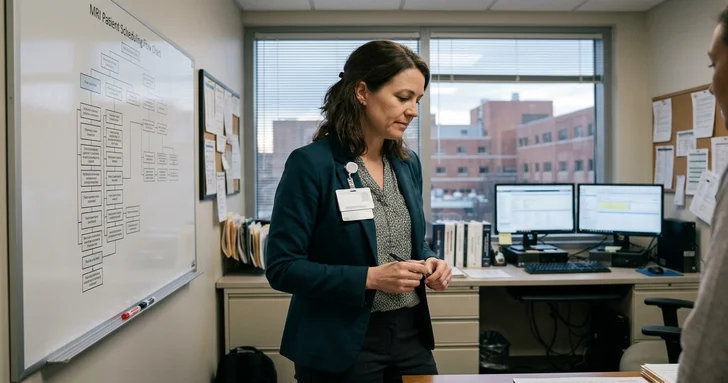
Table of contents
- Quick Facts: Imaging Manager Pay
- How Experience Shapes Imaging Manager Pay
- Imaging Manager Salary by State and Region
- Salary by Work Setting
- Employment Structure, Bonuses, and Interim Roles
- Certifications and Modality Leadership Pay Premiums
- Job Outlook and Pay Trends for 2026 and Beyond
- How to Increase Your Imaging Manager Salary
- About the Job: Role and Career Path
- Frequently Asked Questions
- Sources and Methodology
The national median Imaging Manager salary is $123,860 per year, which works out to an hourly rate of $59.55 per hour, according to data from the Bureau of Labor Statistics for medical and health services managers. Most imaging managers earn between $86,080 (the 25th percentile) and $157,640 (the 75th percentile) annually, while senior department leaders at large health systems and specialized medical centers earn more than $216,750 per year. Compensation varies depending on facility volume, the number of modalities overseen (such as MRI, CT, PET, and ultrasound), local cost of living, and leadership credentials.
Quick Facts: Imaging Manager Pay
Metric | National Figure |
|---|---|
Median Annual Salary | $123,860 per year |
Median Hourly Wage | $59.55 per hour |
Pay Range (10th–90th Percentile) | $67,900 to $216,750 per year ($32.65 to $104.21 per hour) |
Middle 50% (25th–75th Percentile) | $86,080 to $157,640 per year ($41.38 to $75.79 per hour) |
Top-Paying State (Average) | New York ($179,160 per year) |
Projected Employment Growth | 24% (2025 to 2035) |
Annual Job Openings (Projected) | 62,300 openings per year |
Data based on the Bureau of Labor Statistics OEWS and Occupational Outlook Handbook (Medical and Health Services Managers, SOC 11-9111, reference period May 2025).
How Experience Shapes Imaging Manager Pay
Because imaging managers transition into leadership after working as clinical technologists, entry-level managers already carry years of technical scanning experience. However, administrative, regulatory, and fiscal experience determines where a manager falls on the pay scale. In the compensation tables below, the 10th and 25th percentiles represent early management careers, the median reflects mid-career managers running departmental workflows, and the 75th and 90th percentiles reflect experienced managers overseeing multi-site networks or multi-modality hospital systems.
Career Level | Typical Experience | Median Annual Salary | Median Hourly Wage |
|---|---|---|---|
Entry-Level Imaging Manager (10th–25th Percentile) | 1 to 3 years in leadership (plus 5+ years clinical) | $67,900 – $86,080 per year | $32.65 – $41.38 per hour |
Mid-Career Imaging Manager (Median) | 4 to 8 years in imaging management | $123,860 per year | $59.55 per hour |
Senior Imaging Manager (75th–90th Percentile) | 9+ years in management, multi-modality oversight | $157,640 – $216,750 per year | $75.79 – $104.21 per hour |
Data reflects national wage percentiles for SOC 11-9111 published by the Bureau of Labor Statistics, May 2025.
Imaging Manager Salary by State and Region
Geographic demand and local living expenses create significant pay gaps across the United States. States with high healthcare expenditure, dense hospital networks, and strict state regulatory mandates offer the highest annual salaries. On the other hand, higher earnings in metropolitan regions like New York City, Boston, and San Francisco are often balanced by steep living and housing costs.
State | Average Annual Mean Wage | Average Hourly Mean Wage |
|---|---|---|
New York | $179,160 per year | $86.14 per hour |
District of Columbia | $170,710 per year | $82.07 per hour |
Delaware | $164,190 per year | $78.94 per hour |
New Jersey | $162,430 per year | $78.09 per hour |
California | $159,000 per year | $76.44 per hour |
Massachusetts | $158,540 per year | $76.22 per hour |
Figures sourced from the Bureau of Labor Statistics OEWS state tables (SOC 11-9111, May 2025).
At the municipal level, metropolitan areas with major academic medical centers pay well above state medians. According to compensation data from Salary.com (October 2026), diagnostic imaging managers in the San Francisco Bay Area average $224,617 per year ($108.00 per hour), while those in Minneapolis, Minnesota average $190,994 per year ($92.00 per hour). Managers working in lower-cost southeastern states like North Carolina average around $171,106 per year ($82.00 per hour).
Salary by Work Setting
The type of healthcare facility directly affects budget size, staffing volume, and executive compensation. General surgical hospitals pay higher mean salaries because their imaging departments run 24-hour emergency trauma, inpatient MRI, interventional suites, and intensive care radiography. Freestanding outpatient imaging centers operate during standard business hours and offer narrower scope, which translates to slightly lower median salaries but more predictable schedules.
Industry Setting | National Annual Mean Wage | National Hourly Mean Wage |
|---|---|---|
General Medical and Surgical Hospitals | $145,390 per year | $69.90 per hour |
Specialty Hospitals (excluding Psychiatric) | $142,820 per year | $68.66 per hour |
Medical and Diagnostic Laboratories | $135,830 per year | $65.30 per hour |
Offices of Physicians (Private Group Practices) | $134,330 per year | $64.58 per hour |
Outpatient Care Centers | $129,500 per year | $62.26 per hour |
Industry data from the Bureau of Labor Statistics OEWS industry profiles (SOC 11-9111, May 2025).
Employment Structure, Bonuses, and Interim Roles
Most imaging managers are classified as exempt salaried staff, meaning they do not receive standard hourly overtime or night shift differentials. However, compensation structures often incorporate other earnings components:
Annual Performance Bonuses: Hospital systems frequently provide managerial performance bonuses tied to department throughput, patient satisfaction scores, operational budget adherence, and staff retention. These bonuses range from 5% to 15% of base salary ($6,000 to $25,000 per year).
On-Call Coverage: In smaller facilities where an imaging manager occasionally backs up emergency scanning schedules, hospitals may provide administrative on-call stipends or supplemental shift pay.
Interim Leadership Contracts: Experienced leaders who take temporary interim imaging manager contracts through travel healthcare staffing agencies can earn $2,500 to $4,200 per week, along with housing stipends and travel allowances.
Certifications and Modality Leadership Pay Premiums
While an imaging manager does not spend every hour running scanners, holding credentials across multiple modalities (such as ARRT MRI technologist and CT certifications) gives managers deeper authority over protocol optimization, scanner purchase decisions, and cross-training. Leadership credentials such as the Certified Radiology Administrator designation from the Association for Medical Imaging Management (AHRA) show proven competence in asset management, human resources, and healthcare finance.
Credential / Focus Area | Issuing Body | Estimated Pay Premium Over Base Manager Pay |
|---|---|---|
Certified Radiology Administrator (CRA) | AHRA (Radiology Administration Certification Commission) | +8% to +15% ($10,000 – $20,000/yr) |
Certified Imaging Informatics Professional (CIIP) | ABII (ARRT / SIIM) | +5% to +10% ($6,000 – $14,000/yr) |
Fellow of the American College of Healthcare Executives (FACHE) | American College of Healthcare Executives (ACHE) | +10% to +18% ($12,000 – $25,000/yr) |
Dual ARRT Certification (e.g., Radiography + MRI or CT) | American Registry of Radiologic Technologists (ARRT) | +4% to +8% ($5,000 – $10,000/yr) |
Job Outlook and Pay Trends for 2026 and Beyond
The job outlook for imaging leadership is strong. The BLS Occupational Outlook Handbook projects a 24% employment growth rate for medical and health services managers between 2025 and 2035, adding approximately 155,100 new management positions across healthcare facilities nationwide. An estimated 62,300 openings are expected each year on average due to expansion and retirements.
Demand for imaging managers is driven by several structural factors: an aging baby boomer population requiring increased diagnostic screenings (including MRI, CT, and cardiac imaging), capital investments in outpatient imaging suites, and the complex accreditation requirements set by The Joint Commission and the American College of Radiology. Facilities need managers who understand the clinical safety risks of high-field MRI environments alongside financial reimbursement models.
How to Increase Your Imaging Manager Salary
To reach the upper quartiles of imaging management pay, clinical technologists should take concrete career steps:
Earn the Certified Radiology Administrator (CRA) Credential: Administered by the AHRA, the CRA verifies expertise in healthcare finance, operations, communication, asset management, and human resources. Facilities look for this credential when promoting managers to director roles.
Expand Modality Oversight: A manager overseeing single-modality MRI operations generally earns less than a leader directing comprehensive imaging operations (MRI, CT, nuclear medicine, diagnostic X-ray, and ultrasound). Expanding your scope directly increases your pay grade.
Pursue a Master's Degree: Transitioning from an associate degree or bachelor's degree in radiologic technology to a Master of Health Administration (MHA) or Master of Business Administration (MBA) qualifies you for regional director and administrative service line director roles paying over $180,000 annually.
Master Imaging Informatics (PACS / RIS): Facilities value managers who can streamline Picture Archiving and Communication Systems (PACS) and Radiology Information Systems (RIS) to reduce report turnaround times and optimize technologist productivity.
Target Inpatient Trauma and Academic Centers: Level I and Level II trauma hospitals and university teaching centers maintain larger departmental budgets and offer higher pay brackets than small single-scanner clinics.
About the Job: Role and Career Path
An imaging manager oversees the clinical, financial, and administrative operations of a medical imaging department or independent imaging center. Daily responsibilities include coordinating technologist staffing schedules, enforcing radiation and MRI safety protocols, managing vendor equipment service contracts, handling departmental budgeting, and ensuring compliance with state health departments, Medicare guidelines, and The Joint Commission.
Most imaging managers start their careers as registered radiologic technologists, ARRT MRI technologists, or diagnostic medical sonographers. After 3 to 7 years of clinical practice, technologists typically advance into lead technologist or departmental supervisor roles before moving into a full manager position. Employers prefer candidates with a Bachelor of Science in Radiologic Sciences, Healthcare Administration, or Business, with advanced positions favoring master's degrees.
Frequently Asked Questions
Sources and Methodology
Wage and employment figures in this report are sourced from the U.S. Bureau of Labor Statistics Occupational Employment and Wage Statistics (OEWS) program (SOC 11-9111, Medical and Health Services Managers, reference period May 2025, published 2026), the BLS Occupational Outlook Handbook (2025–2035 projection cycle), and imaging management market compensation surveys from the Association for Medical Imaging Management (AHRA) and Salary.com (October 2026).
Frequently asked questions
The national median hourly wage for an imaging manager is $59.55 per hour, according to the Bureau of Labor Statistics for medical and health services managers. Most earn between $41.38 per hour (25th percentile) and $75.79 per hour (75th percentile), with top earners in high-paying states making over $104.21 per hour.
An entry-level imaging manager (typically someone in their first one to three years of managerial responsibility, with prior technologist experience) earns between $67,900 and $86,080 per year (the 10th to 25th percentile of national medical management pay).
According to the BLS, New York pays the highest average annual wage for health services managers at $179,160 per year, followed by the District of Columbia ($170,710), Delaware ($164,190), New Jersey ($162,430), and California ($159,000).
Staff MRI technologists earn a national median of approximately $80,000 to $92,000 per year. Transitioning into an imaging manager role represents a substantial step up in compensation, with median annual earnings of $123,860 and top-end potential exceeding $200,000.
A Certified Radiology Administrator (CRA) credential is not legally required, but it is one of the most recognized certifications in the industry. Holding the CRA frequently qualifies managers for higher starting salary tiers, annual bonuses, and faster promotion to director-level positions.

Content manager
Erica Niklasson