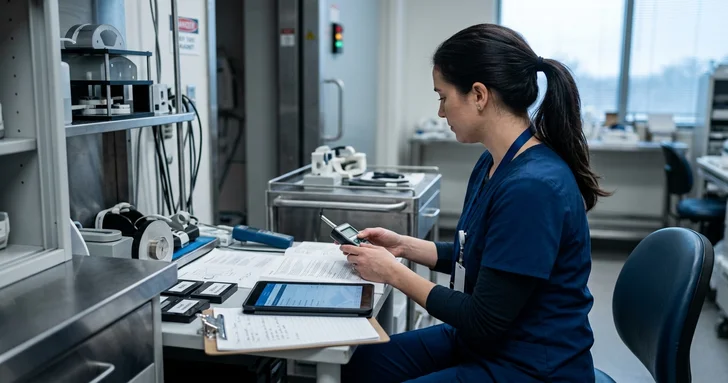








$93,850 per year is the median MRI / Mammography Technologist salary ($45.12 per hour). California leads at $128,400 per year.
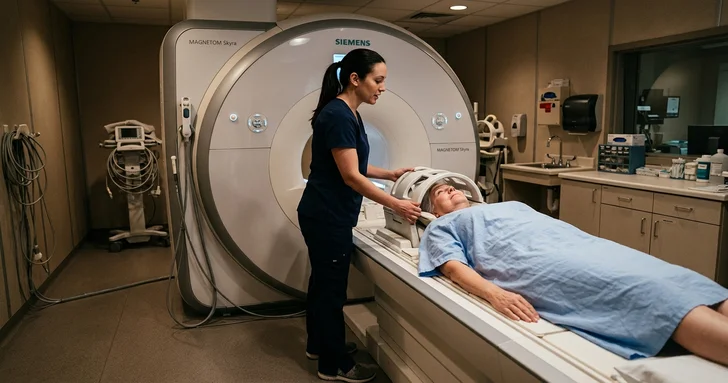
Table of contents
- MRI / Mammography Technologist Quick Compensation Facts
- How Cross-Modality Affects MRI / Mammography Technologist Pay
- Salary by Experience Level
- MRI / Mammography Technologist Salary by State and Metro Area
- Compensation by Work Setting
- Shift Differentials, Per Diem, and Travel Contracts
- Certifications and Specializations That Increase Pay
- Pay Outlook for 2026 and Beyond
- Practical Steps to Maximize Your Salary
- About the Job: Scope and Qualifications
- Frequently Asked Questions
- Sources and Data Reference
The median MRI / Mammography Technologist salary in the United States is $93,850 per year, which translates to an hourly wage of $45.12 per hour. Base compensation for dual-skilled imaging technologists typically ranges between $72,400 per year at the 10th percentile and $122,800 per year at the 90th percentile. Cross-modality technologists who hold credentials in both magnetic resonance imaging and mammography earn a premium over single-modality radiographers because facilities can staff one professional across breast imaging suites and high-field MRI scanners.
MRI / Mammography Technologist Quick Compensation Facts
Metric | National Figure |
|---|---|
Median Annual Salary | $93,850 per year |
Median Hourly Wage | $45.12 per hour |
Pay Range (10th–90th Percentile) | $72,400 – $122,800 per year ($34.81 – $59.04 per hour) |
Top-Paying State | California ($128,400 per year average) |
Total Workforce (Imaging & MRI Fields) | Approx. 265,000 total radiologic and MRI technologists |
Projected 10-Year Job Growth | 6% (Faster than average) |
Figures synthesized from the U.S. Bureau of Labor Statistics (OEWS, May 2024 / released 2025) and the American Society of Radiologic Technologists (ASRT) Wage and Salary Survey.
How Cross-Modality Affects MRI / Mammography Technologist Pay
The Bureau of Labor Statistics tracks Magnetic Resonance Imaging Technologists (SOC 29-2035) at a median annual wage of $88,180 ($42.39 per hour) and general Radiologic Technologists (SOC 29-2034) at $77,660 ($37.34 per hour). Mammography falls within the broader radiologic technologist classification under federal surveys.
However, when a technologist masters both disciplines—combining FDA Mammography Quality Standards Act (MQSA) qualifications with ARRT MRI registry credentials—employers pay an operational premium. In women's health pavilions and comprehensive cancer centers, these cross-modality technologists alternate between 3D screening tomosynthesis, diagnostic mammograms, stereotactic biopsies, and breast MRI protocols. That dual capability removes the need for two separate staffing lines.
Data from professional workforce assessments highlights steady upward mobility across these modalities:
This year's survey shows consistent gains across all major disciplines as compared to the 2022 wage and salary survey.
— Melissa Culp, M.Ed., R.T.(R)(MR), ASRT Executive Vice President of Member Engagement, ASRT Wage and Salary Survey Report
Salary by Experience Level
Your years on the console directly shape how much an MRI / Mammography Technologist makes. Entry-level staff start by running standard screening mammograms and routine brain, spine, and joint MRI exams. Senior technologists handle specialized breast MRI biopsies, contrast protocols, artifact troubleshooting, and clinical instruction.
Career Stage | Years in Practice | Hourly Rate | Annual Salary |
|---|---|---|---|
Entry-Level | 0–2 Years | $34.81 – $38.50 per hour | $72,400 – $80,080 per year |
Mid-Career | 3–7 Years | $42.00 – $48.25 per hour | $87,360 – $100,360 per year |
Senior / Lead Specialist | 8+ Years | $52.10 – $59.04 per hour | $108,370 – $122,800 per year |
An entry-level MRI / Mammography Technologist salary generally begins around $72,400 per year. Once you log three to five years and demonstrate independent competence on both 3T MRI systems and digital breast tomosynthesis units, pay routinely crosses the $90,000 threshold.
MRI / Mammography Technologist Salary by State and Metro Area
Geographic demand and regional healthcare funding create notable variations in MRI / Mammography Technologist pay across the country. Western and northeastern states lead in compensation, though local housing and tax rates offset part of that difference.
State / Metropolitan Area | Average Hourly Wage | Average Annual Salary |
|---|---|---|
California | $61.73 per hour | $128,400 per year |
San Jose-Sunnyvale-Santa Clara, CA | $68.45 per hour | $142,380 per year |
San Francisco-Oakland-Hayward, CA | $66.10 per hour | $137,490 per year |
Delaware | $51.28 per hour | $106,670 per year |
Washington | $50.40 per hour | $104,830 per year |
New York | $48.95 per hour | $101,820 per year |
Texas | $43.15 per hour | $89,750 per year |
Florida | $41.80 per hour | $86,940 per year |
Ohio | $39.20 per hour | $81,540 per year |
While metropolitan areas like San Jose and San Francisco post mean salaries exceeding $137,000 per year, technologists in states like Texas and Ohio often experience comparable purchasing power due to significantly lower living costs.
Compensation by Work Setting
The facility type determines not only your daily scan schedule but also your compensation structure. Outpatient imaging centers and specialty breast clinics offer predictable daytime hours, while hospitals provide shift differentials and higher overtime access.
Work Setting | Typical Hourly Wage | Typical Annual Salary |
|---|---|---|
Outpatient Imaging Centers | $46.50 – $52.00 per hour | $96,720 – $108,160 per year |
General Medical & Surgical Hospitals | $43.00 – $48.50 per hour | $89,440 – $100,880 per year |
Dedicated Breast Health Clinics | $44.25 – $49.75 per hour | $92,040 – $103,480 per year |
Physician Offices & Specialty Groups | $40.50 – $45.00 per hour | $84,240 – $93,600 per year |
Outpatient care networks often pay premium base rates to attract dual-certified technologists who can work independently without on-site radiologist supervision during standard scanning hours.
Shift Differentials, Per Diem, and Travel Contracts
Base pay tells only part of the story. You can increase your total earnings by altering how and when you work:
Shift Differentials: Evening shifts generally add $3.00 to $5.50 per hour, while weekend and night shifts add $4.50 to $8.00 per hour to your base rate.
On-Call Pay: Carrying the MRI emergency pager pays $4.00 to $7.00 per standby hour, with guaranteed 1.5x pay (minimum 2 hours) when called in for emergent scans.
PRN / Per Diem: Flexible pool technologists trade health benefits for higher hourly wages, frequently earning $52.00 to $65.00 per hour.
Travel Contracts: Cross-modality travelers skilled in both MRI and mammography earn between $2,200 and $2,800 per week, inclusive of tax-free housing stipends, depending on facility urgency and location.
Certifications and Specializations That Increase Pay
Radiologic imaging rewards verified technical credentials. Earning post-primary registrations through the American Registry of Radiologic Technologists (ARRT) establishes your clinical scope and gives you leverage during wage reviews.
Credential / Modality Profile | ARRT Designation | Average Annual Compensation |
|---|---|---|
Primary Radiography Only | R.T.(R) | $73,270 per year |
Mammography Technologist | R.T.(R)(M) | $88,470 per year |
MRI Technologist (Single Modality) | R.T.(R)(MR) or ARMRIT | $92,730 per year |
Dual MRI + Mammography Technologist | R.T.(R)(M)(MR) | $98,500 per year |
Lead Cross-Modality / Breast MRI Specialist | R.T.(R)(M)(MR) + Lead Role | $112,000 per year |
Holding the triple credential—Radiography, Mammography, and MRI—places you in the top earning tier of non-invasive diagnostic technologists.
Pay Outlook for 2026 and Beyond
The job market for cross-modality imaging professionals remains exceptionally strong. According to projections from the BLS Occupational Outlook Handbook, employment for radiologic and MRI technologists is projected to grow 6% through the coming decade.
Demand is fueled by two converging factors: an aging population requiring higher volumes of routine oncologic surveillance and breast cancer screening, and clinical adoption of breast MRI for high-risk patients. Because many imaging facilities report staffing vacancies exceeding 10% in both mammography and MRI departments, compensation for cross-trained technologists will remain competitive through 2026 and subsequent years.
Practical Steps to Maximize Your Salary
If you want to move into the upper quartile of the MRI / Mammography Technologist hourly wage scale, follow these specific career steps:
Complete the Post-Primary ARRT (MR) and ARRT (M) Pathways: Do not rely solely on on-the-job training. Formalizing your credentials with ARRT board certifications guarantees eligibility for cross-modality pay scale steps.
Master Interventional Breast Procedures: Technologists who assist with MRI-guided vacuum-assisted core biopsies and stereotactic mammography localization earn higher specialty rates than screening-only operators.
Target Outpatient Diagnostic Chains: Independent imaging networks frequently provide higher base hourly rates and quarterly performance incentives compared to public municipal hospital systems.
Negotiate Dual-Registry Stipends: When interviewing, request a structured multi-modality differential (typically $2.00 to $4.50 per hour above the single-modality baseline) written into your offer letter.
Step into Lead Tech or Safety Officer Roles: Assume responsibilities such as MRI Safety Officer (MRSO) or MQSA Quality Control Lead to justify promotion to senior supervisory compensation bands.
About the Job: Scope and Qualifications
A cross-modality MRI / Mammography Technologist operates complex diagnostic equipment across two separate physics platforms. In the mammography suite, you position patients for low-dose 2D/3D X-ray breast examinations, verify tissue compression parameters, and maintain rigorous MQSA documentation. In the MRI suite, you screen patients for ferromagnetic hazards, administer intravenous gadolinium contrast media, and set RF pulse sequences to generate high-resolution multiplanar images.
Entering the field requires completion of an accredited radiologic technology program (typically an Associate of Applied Science or Bachelor of Science degree), passing the ARRT primary radiography examination, and logging the clinical repetition requirements necessary to sit for the post-primary Mammography and MRI board exams.
Frequently Asked Questions
Sources and Data Reference
Wage benchmarks and employment figures are derived from the Bureau of Labor Statistics Occupational Employment and Wage Statistics (May 2024 survey, released 2025) for Magnetic Resonance Imaging Technologists (SOC 29-2035) and Radiologic Technologists (SOC 29-2034), long-term projection metrics from the BLS Occupational Outlook Handbook, and longitudinal compensation findings from the ASRT Radiologic Technologist Wage and Salary Survey.
Frequently asked questions
The national median hourly wage sits at $45.12 per hour. Starting hourly rates average around $34.81 per hour, while highly experienced lead specialists earn up to $59.04 per hour.
Cross-modality technologists certified in both MRI and mammography earn approximately $6,000 to $12,000 per year more than single-modality radiographers, thanks to dual-modality differentials and wider scheduling utility.
California leads the country with an average salary of $128,400 per year ($61.73 per hour), followed by Delaware, Washington, and New York.
New cross-modality technologists with less than two years of experience typically start between $72,400 and $80,080 per year ($34.81 to $38.50 per hour), depending on region and work setting.
Yes. Combining MRI and mammography provides exceptional job security, protects against modality-specific schedule reductions, and opens high-paying roles in dedicated women's imaging centers and travel healthcare staffing.

Content manager
Erica Niklasson