







$95,480 per year ($45.90 per hour) is the median MRI Technologist salary. Most earn from $68,890 per year to $127,670 per year.
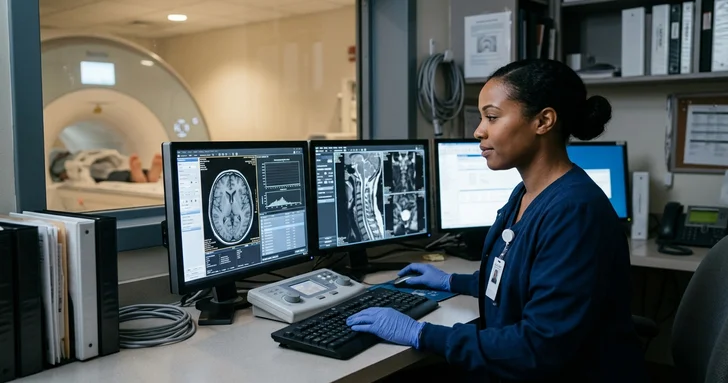
Table of contents
- Quick Facts: MRI Technologist Pay
- How Much Does an MRI Technologist Make by Experience Level?
- MRI Technologist Salary by State and Metro Area
- Pay by Work Setting: Outpatient vs. Hospital
- Shift Differentials, PRN, and Travel MRI Technologist Pay
- Certifications and Subspecialties: What Pays More?
- Pay Outlook for 2026 and Beyond
- How to Raise Your MRI Technologist Pay
- About the Job: Education and Career Path
- Frequently Asked Questions
- Sources
The median MRI Technologist salary in the United States is $95,480 per year, which works out to an hourly wage of $45.90 per hour, according to data from the Bureau of Labor Statistics (May 2025 release). Most technologists earn between $68,890 for entry-level positions and $127,670 for senior or specialized roles. Where you sit within that band depends heavily on your geographic location, your practice setting, your shift arrangements, and whether you hold advanced post-primary imaging credentials.
Quick Facts: MRI Technologist Pay
Metric | National Figure |
|---|---|
Median Annual Salary | $95,480 per year |
Median Hourly Wage | $45.90 per hour |
Salary Range (10th to 90th Percentile) | $68,890 to $127,670 per year |
Hourly Wage Range (10th to 90th Percentile) | $33.12 to $61.38 per hour |
Top-Paying State (Annual Mean) | California ($129,950 per year) |
Total U.S. Employment | 43,900 jobs |
Job Growth Projection (2025–2035) | 8% (Faster than average) |
Source: U.S. Bureau of Labor Statistics Occupational Employment and Wage Statistics, May 2025 reference period.
How Much Does an MRI Technologist Make by Experience Level?
Starting out in magnetic resonance imaging, pay begins well above that of general radiography. The Bureau of Labor Statistics does not publish formal breakdowns by years on the job, but wage percentiles track the typical career arc closely: the 10th percentile reflects starting pay for new graduates, the median reflects mid-career staff technologists, and the 90th percentile captures senior technologists, lead techs, and specialized scanners.
Entry-level MRI technologist salary figures hover near $68,890 per year ($33.12 per hour). As technologists gain speed on multiple scanner consoles (such as Siemens, GE, and Philips) and learn complex sequences, compensation climbs steadily. Senior technologists who supervise safety protocols, manage contrast administration, or perform specialized scans routinely clear six figures.
Career Stage | Experience Level | Percentile Equivalent | Annual Salary | Hourly Rate |
|---|---|---|---|---|
Entry-Level | 0–2 Years | 10th Percentile | $68,890 per year | $33.12 per hour |
Early Career | 3–5 Years | 25th Percentile | $78,150 per year | $37.57 per hour |
Mid-Career | 6–10 Years | 50th Percentile (Median) | $95,480 per year | $45.90 per hour |
Experienced | 10–15 Years | 75th Percentile | $102,440 per year | $49.25 per hour |
Senior / Lead Tech | 15+ Years / Specialist | 90th Percentile | $127,670 per year | $61.38 per hour |
MRI Technologist Salary by State and Metro Area
Location causes substantial variance in MRI technologist pay. High-wage states like California, Washington, Massachusetts, and Alaska lead national compensation tables, largely driven by elevated living costs, state licensing standards, and aggressive competition among major hospital networks.
California ranks as the highest-paying state, with mean wages surpassing $129,950 per year ($62.48 per hour). Certain metropolitan markets pay even higher: technologists working in the San Francisco-Oakland, San Jose, and Los Angeles metro areas frequently report base wages above $140,000 per year before shift differentials.
State | Annual Mean Wage | Hourly Mean Wage | Cost of Living Context |
|---|---|---|---|
California | $129,950 per year | $62.48 per hour | Significantly higher than national baseline |
Washington | $112,480 per year | $54.08 per hour | Above average, especially Seattle metro |
Alaska | $109,830 per year | $52.80 per hour | High living costs and geographic isolation |
Massachusetts | $108,620 per year | $52.22 per hour | High housing and urban expenses |
New York | $107,380 per year | $51.63 per hour | Substantial spread between NYC and upstate |
Texas | $89,640 per year | $43.10 per hour | Moderate cost of living with no state income tax |
Florida | $82,910 per year | $39.86 per hour | Near average living costs; high retiree demand |
Alabama | $74,250 per year | $35.70 per hour | Lower living costs offset lower base pay |
Keep purchasing power in mind when comparing numbers. An MRI technologist earning $89,640 in Dallas or Houston often enjoys comparable take-home spending power to someone earning $118,000 in New York City or Boston due to housing prices and state income taxes.
Pay by Work Setting: Outpatient vs. Hospital
Where you work changes your pay structure and your daily routine. According to the BLS OEWS survey, over 60% of MRI technologists work in general medical and surgical hospitals, while approximately 20% work in outpatient diagnostic imaging centers and physician clinics.
Work Setting | Estimated Median Annual Pay | Estimated Median Hourly Wage | Workload & Shift Characteristics |
|---|---|---|---|
Outpatient Imaging Centers | $104,200 per year | $50.10 per hour | Scheduled exams, rarely on-call, regular daytime hours |
General Medical & Surgical Hospitals | $94,860 per year | $45.61 per hour | 24/7 scanning, emergency cases, inpatient transfers |
Offices of Physicians (Ortho/Neuro) | $88,400 per year | $42.50 per hour | Specialized joint/spine scans, predictable weekly schedule |
Medical & Diagnostic Laboratories | $86,810 per year | $41.74 per hour | High volume routine protocols, outpatient environment |
Academic & Research Centers | $96,500 per year | $46.39 per hour | Advanced research protocols, 3T and 7T magnet systems |
While outpatient facilities often offer higher base hourly rates to attract skilled staff, hospitals compensate with richer fringe benefits, comprehensive health plans, tuition assistance, and ample overtime opportunities.
Shift Differentials, PRN, and Travel MRI Technologist Pay
Base salary numbers only tell part of the story. Additional compensation mechanisms allow technologists to increase their actual earnings substantially:
Shift Differentials: Evening (second shift) and overnight (third shift) assignments typically add an extra $3.00 to $7.00 per hour to the base rate. Weekend shifts often tack on another $3.50 to $6.00 per hour.
On-Call and Call-Back Pay: Trauma centers and hospital departments pay $4.00 to $8.00 per hour simply for carrying the pager, plus time-and-a-half (with minimum guaranteed hours) when called in for emergent scans like stroke or spinal cord compression evaluations.
PRN and Per Diem Rates: Technologists working on-call or per diem bypass traditional benefits in exchange for premium hourly rates, often landing between $55.00 and $75.00 per hour depending on regional demand.
Travel MRI Contracts: Travel technologists working 13-week regional assignments through staffing agencies receive combined hourly pay and tax-free stipends for housing and meals. According to industry job boards, travel MRI assignments in 2026 average between $2,200 and $3,400 per week ($114,000 to $176,000 annualized).
Certifications and Subspecialties: What Pays More?
Holding primary or post-primary credentials through the American Registry of Radiologic Technologists (ARRT) or the American Registry of Magnetic Resonance Imaging Technologists (ARMRIT) is the baseline expectation for almost all high-paying employers. Beyond basic certification, specialized competencies carry significant wage premiums.
According to national wage surveys published by the American Society of Radiologic Technologists (ASRT), technologists who handle complex subspecialties command compensation at the highest percentiles of the profession.
Specialty / Certification | Credentialing Body | Average Annual Pay | Hourly Rate |
|---|---|---|---|
Cardiac MRI Specialist | ARRT MRI / SCMR Guidelines | $112,500 per year | $54.09 per hour |
Breast MRI Specialist | ARRT MRI + Advanced Training | $108,200 per year | $52.02 per hour |
Neuro / Functional MRI (fMRI) | ARRT MRI / Research Protocols | $103,400 per year | $49.71 per hour |
Dual-Certified CT and MRI Technologist | ARRT (R)(CT)(MR) | $101,800 per year | $48.94 per hour |
Standard Staff ARRT MRI Technologist | ARRT (MR) or ARRT (R)(MR) | $95,480 per year | $45.90 per hour |
ARMRIT Certified Technologist | ARMRIT | $92,300 per year | $44.38 per hour |
Cardiac MRI requires precise ECG-gating knowledge, breath-hold timing, and cine sequence optimization, making cardiac-capable technologists rare and valuable. Dual registry in both computed tomography and magnetic resonance makes you especially attractive to emergency departments that operate cross-modality shifts.
Pay Outlook for 2026 and Beyond
The job outlook for magnetic resonance technologists remains exceptionally strong. The Bureau of Labor Statistics projects employment in this occupation to grow by 8% from 2025 to 2035, generating roughly 3,400 new scanning jobs and thousands of replacement openings as older technologists retire.
Demand is driven by an aging American population that requires soft-tissue, oncological, orthopedic, and neurological imaging. In addition, advancements in scanner speed and magnetic field strengths (such as wide-bore 3T systems) continue to expand the clinical conditions evaluated under MRI rather than exploratory surgery or ionizing radiation.
Vacancy rates in imaging departments across the country remain elevated, keeping upward pressure on hourly wages and sign-on incentives through 2026.
How to Raise Your MRI Technologist Pay
If you want to move toward the top quartile of earners, take these targeted steps:
Earn Dual Modality Certification: Adding an ARRT computed tomography or radiography credential to your magnetic resonance registry gives you the versatility to pick up extra high-rate shifts and manage mixed-modality imaging departments.
Master Advanced Scanning Protocols: Learn specialized sequences such as cardiac gating, prostate imaging with PIRADS reporting, breast MRI biopsies, and spectroscopy. Facilities pay top dollar for techs who can run complex exams without physician intervention.
Leverage Shift and Call Premiums: Taking dedicated evening, weekend, or holiday rotations can add $10,000 to $18,000 per year to your base pay through accumulated differentials and call-back minimums.
Target High-Paying Settings and Regions: Transition from small rural clinics to regional Level 1 trauma centers or specialized outpatient chains. If personal circumstances allow, explore travel technologist contracts for 13 to 26 weeks to maximize cash flow.
Step into Lead or Supervisory Roles: Transitioning into an MRI safety officer (MRSO), lead technologist, or clinical imaging manager role shifts your compensation from staff bands into administrative ranges ($115,000 to $135,000+ per year).
About the Job: Education and Career Path
An MRI technologist operates powerful superconducting magnetic resonance scanners to generate cross-sectional diagnostic images of human tissue, organs, and bones without using ionizing radiation. Daily responsibilities include rigorously screening patients for ferromagnetic implants, administering gadolinium-based contrast agents via IV lines, adjusting radiofrequency pulse sequences, and positioning patients inside the magnet bore.
Most technologists enter the field by earning an Associate Degree in Radiologic Technology or Medical Imaging accredited by JRCERT, passing the ARRT radiography exam, and completing clinical MRI competencies to earn their post-primary ARRT (MR) credential. Direct primary pathway programs in magnetic resonance imaging are also available through accredited colleges, leading to ARRT or ARMRIT certification.
Frequently Asked Questions
Sources
Compensation data, percentiles, and employment outlook figures in this report are compiled from the U.S. Bureau of Labor Statistics Occupational Employment and Wage Statistics (SOC 29-2035, May 2025 release), the BLS Occupational Outlook Handbook, and longitudinal salary surveys published by the American Society of Radiologic Technologists and the American Registry of Radiologic Technologists.
Frequently asked questions
The national median hourly wage for an MRI technologist is $45.90 per hour, based on May 2025 BLS data. Entry-level technologists typically start around $33.12 per hour, while experienced technologists in high-paying regions or specialized roles earn over $61.38 per hour.
California pays the highest average MRI technologist salary, with a mean annual compensation of $129,950 per year ($62.48 per hour). Other high-paying states include Washington, Alaska, Massachusetts, and New York.
An entry-level ARRT MRI technologist with less than two years of experience typically earns near the 10th percentile, which sits at $68,890 per year ($33.12 per hour). Starting wages are noticeably higher in major metropolitan areas and outpatient centers.
Yes. On average, MRI technologists earn about $15,370 more per year than general radiologic technologists ($95,480 vs. $80,110 median). They also tend to earn slightly more than standalone CT technologists due to the complex physics, extensive safety protocols, and lengthy exam sequences involved in magnetic resonance imaging.
Travel MRI technologists typically earn between $2,200 and $3,400 per week, combining taxable base hourly rates with tax-free lodging and meal stipends. Over a 52-week equivalent, this translates to $114,000 to $176,000 per year.

Content manager
Erica Niklasson