







$95,480 per year is the national median Pediatric MRI Technologist salary, with specialists averaging $110,285 per year, or $53.02 per hour.
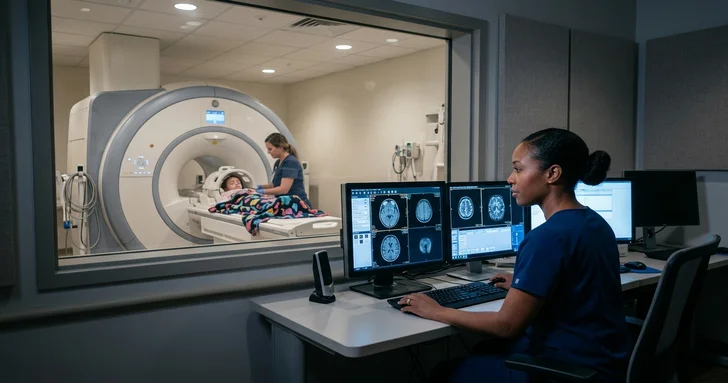
Table of contents
- How Pediatric MRI Technologist Pay Differs from General Imaging
- Factors That Affect Pediatric MRI Technologist Salary
- Specializations and Certifications That Boost Pay
- Pay Outlook for 2026 and Beyond
- How to Increase Your Pediatric MRI Technologist Pay
- About the Job
- Frequently Asked Questions
- Sources and Methodology
The median Pediatric MRI Technologist salary in the United States sits between $95,480 per year (the national baseline for magnetic resonance imaging technologists according to the Bureau of Labor Statistics) and $110,285 per year for dedicated pediatric specialists, based on compensation figures compiled by ZipRecruiter. On an hourly basis, pediatric MRI technologists typically earn between $45.91 per hour and $53.02 per hour. Pay spans a broad spectrum: entry-level technologists in lower-cost markets start around $68,890 per year ($33.12 per hour), while experienced lead technologists, travelers, and staff at high-volume pediatric academic hospitals routinely earn over $127,670 per year ($61.38 per hour).
Metric | National Figure |
|---|---|
Median Annual Salary | $95,480 per year |
Average Specialized Pediatric Pay | $110,285 per year |
Median Hourly Wage | $45.91 per hour |
25th to 75th Percentile Range | $78,450 to $114,000 per year |
10th to 90th Percentile Range | $68,890 to $127,670+ per year |
Top-Paying State (General MRI Base) | District of Columbia ($128,710 per year) / California ($124,000 per year) |
Total MRI Technologists Employed | 43,390 nationwide |
Job Outlook (2025–2035) | 8% projected growth (faster than average) |
Sources: U.S. Bureau of Labor Statistics (OEWS, May 2025 release) and ZipRecruiter salary analytics (October 2026).
How Pediatric MRI Technologist Pay Differs from General Imaging
The federal government does not maintain an independent Standard Occupational Classification (SOC) code strictly for pediatric scanning. Instead, the Bureau of Labor Statistics groups all magnetic resonance professionals under SOC 29-2035 (Magnetic Resonance Imaging Technologists). In practice, pediatric MRI technologist pay trends higher than the general adult MRI median. Scanning infants, children, and teens demands advanced patient management skills, deep familiarity with sedation workflows, custom pediatric coil placement, and specialized pulse sequences tailored to rapid breathing and small anatomy. Dedicated children's hospitals and pediatric trauma centers pay a premium to attract technologists who can handle these technical and emotional demands.
Factors That Affect Pediatric MRI Technologist Salary
Pay by Experience Level
Experience dictates base compensation, procedural autonomy, and on-call assignments. Technologists entering a pediatric radiology suite directly out of an imaging program start near the 10th to 25th percentiles while mastering pediatric immobilization, feed-and-bundle techniques for infants, and sedation protocols. Mid-career professionals with independent competencies earn near the national median, whereas senior technologists running complex cardiac, functional, or fetal MRI protocols command top-tier rates.
Career Stage | Experience | Typical Hourly Wage | Typical Annual Salary |
|---|---|---|---|
Entry-Level Pediatric MRI Technologist | 0–2 years | $33.12 – $38.50 per hour | $68,890 – $80,080 per year |
Mid-Career Pediatric MRI Technologist | 3–7 years | $43.50 – $53.00 per hour | $90,480 – $110,240 per year |
Senior / Lead Pediatric MRI Technologist | 8+ years | $55.00 – $65.50+ per hour | $114,400 – $136,240+ per year |
Note: Percentile distributions from BLS May 2025 data serve as the benchmark for entry-level (10th-25th percentile), mid-career (median), and senior roles (90th percentile), adjusted for pediatric market differentials.
Geographic Location and Top-Paying States
Where you scan makes a substantial difference in your paycheck. High-cost metropolitan centers and states with robust union representation offer the highest hourly rates. California, the District of Columbia, Washington, Oregon, and New York lead the country in baseline MRI compensation.
State / Area | Median Hourly Wage | Median Annual Salary | Top 10% Annual Earning |
|---|---|---|---|
District of Columbia | $61.88 per hour | $128,710 per year | $134,950 per year |
California | $59.62 per hour | $124,000 per year | $174,030 per year |
Washington | $59.01 per hour | $122,750 per year | $160,320 per year |
Oregon | $58.62 per hour | $121,920 per year | $131,680 per year |
Alaska | $57.99 per hour | $120,610 per year | $127,010 per year |
New York | $54.46 per hour | $113,270 per year | $149,820 per year |
Texas | $44.20 per hour | $91,930 per year | $118,500 per year |
Urban hubs like San Jose, San Francisco, Seattle, and Los Angeles feature hourly rates above $65.00 per hour. However, high housing expenses in those markets offset a portion of that income. Technologists in states like Texas, Ohio, and North Carolina often experience stronger local purchasing power despite lower nominal salaries.
Work Setting
Work environments vary significantly across pediatric imaging:
Standalone Children's Hospitals: These facilities handle the highest acuity cases, including neonates from the NICU and pediatric oncology patients. Base pay is competitive, and shift differentials are substantial.
Academic Medical Centers: Major university hospitals frequently run advanced pediatric research protocols (such as fetal MRI and pediatric neuroimaging). Pay structures are standardized, often tied to clear salary bands or collective bargaining agreements.
Outpatient Pediatric Imaging Centers: These facilities offer predictable daytime schedules and lower patient acuity. Base wages can be high, but overtime and on-call bonuses are rare.
Travel and Contract Staffing: Pediatric MRI travelers fill acute staffing voids at major children's hospitals. Weekly gross pay ranges between $2,100 and $2,900 per week, translating to annualized earnings between $110,000 and $145,000 when working continuous contracts.
Shifts, On-Call, and Premium Differentials
Pediatric emergencies do not stop at 5:00 PM. Technologists who work evening, night, or weekend rotations receive shift differentials between $3.50 and $7.00 per hour above their base wage. Standby on-call pay (typically $4.00 to $8.00 per hour just to carry the pager) plus guaranteed time-and-a-half call-in pay (minimum 2 to 4 hours per callback) adds $8,000 to $18,000 in extra annual income for hospital-based technologists.
Specializations and Certifications That Boost Pay
Primary certification through the American Registry of Radiologic Technologists (ARRT) or the American Registry of Magnetic Resonance Imaging Technologists (ARMRIT) is required by almost all healthcare employers. Adding secondary credentials and clinical subspecialties strengthens your resume and directly impacts your starting offer.
Certification / Skill Area | Issuing Body | Estimated Pay Impact | Primary Focus |
|---|---|---|---|
ARRT (MR) Post-Primary Registry | ARRT | Baseline requirement / +$3–$5/hr vs RT alone | Comprehensive magnetic resonance physics and clinical safety |
MR Safety Officer (MRSO) | American Board of Magnetic Resonance Safety (ABMRS) | +$4,000 – $8,000 per year | Zone IV safety, implant screening, RF heating risk management |
Pediatric Advanced Life Support (PALS) | American Heart Association | Required in sedation suites / +$1–$2/hr | Emergency airway and hemodynamic support in pediatric sedation |
Pediatric Cardiac MRI Specialist | Institutional / Clinical Track | +$5.00 – $8.00 per hour | Congenital heart disease, 4D flow imaging, respiratory gating |
Fetal MRI Competency | Institutional / Clinical Track | +$3.00 – $6.00 per hour | Ultrafast single-shot imaging for prenatal anomaly diagnosis |
According to biennial workforce analysis from the American Society of Radiologic Technologists, multimodality technologists and those holding advanced post-primary credentials consistently earn higher annual compensation than single-registry peers.
Pay Outlook for 2026 and Beyond
Employment for magnetic resonance imaging technologists is projected to grow 8 percent from 2025 to 2035 according to the U.S. Bureau of Labor Statistics. That translates to approximately 15,300 annual openings across radiologic and MRI professions to fill new roles and replace retiring workers.
Demand for pediatric imaging specialists is accelerating. Hospitals are increasingly replacing computed tomography (CT) with MRI for pediatric diagnostic workups to eliminate ionizing radiation risks in children. Rapid imaging techniques, artificial intelligence reconstruction software, and quieter gradient coils have made non-sedated scans viable for younger patients, increasing outpatient volume and creating a steady demand for qualified technologists.
How to Increase Your Pediatric MRI Technologist Pay
If you want to move from median pay into the top earning decile, focus on actionable professional moves:
Obtain the MRSO Credential: Earning your Magnetic Resonance Safety Officer certification through the ABMRS proves you can manage Zone IV safety, assess conditional pacemakers and shunts, and lead department safety committees. Employers routinely attach a salary stipend or title bump to this credential.
Master Pediatric Cardiac and Fetal Protocols: Routine brain and spine scans are standard. The real leverage lies in scanning complex congenital heart anomalies, fetal neuroanatomy, and non-sedated motion-corrected protocols. Technologists with these skills are rare and highly sought after by Level I pediatric trauma centers.
Cross-Train in Sedation Suite Workflows: Get certified in Pediatric Advanced Life Support (PALS). Working directly alongside pediatric anesthesiologists and child life specialists makes you indispensable for high-risk surgical planning scans.
Take Advantage of Premium Shift Differentials: Taking second-shift rotations or joining the weekend on-call roster provides immediate hourly increases of $4.00 to $7.00 per hour without switching employers.
Transition to Travel Scanning: If personal flexibility permits, taking 13-week pediatric travel assignments at regional children's hospitals provides weekly tax-free stipends and higher gross compensation than traditional permanent staff positions.
About the Job
A Pediatric MRI Technologist prepares and positions neonatal, child, and adolescent patients inside the MRI scanner bore, selects imaging parameters, and executes diagnostic scan sequences prescribed by pediatric radiologists. Beyond technical machine operation, the role requires deep empathy: technologists coordinate with child life specialists to ease anxiety, use mock scanner tunnels to prepare children, position custom immobilization pads, monitor sedated patients, and verify that all patient implants (such as hydrocephalus shunts and surgical clips) are MRI conditional.
Most technologists enter the field by completing an accredited associate or bachelor's degree in radiologic technology or magnetic resonance imaging, followed by ARRT or ARMRIT certification. State licensure is required in most jurisdictions. Pediatric subspecialization occurs through clinical rotations at pediatric facilities and structured on-the-job training.
Frequently Asked Questions
Sources and Methodology
Salary and employment figures in this guide are derived from the U.S. Bureau of Labor Statistics Occupational Employment and Wage Statistics (OEWS) program (May 2025 release, updated for 2026), the BLS Occupational Outlook Handbook, active job posting data from ZipRecruiter, and longitudinal compensation reports from the American Society of Radiologic Technologists (ASRT).
Frequently asked questions
The national median hourly wage for MRI technologists is $45.91 per hour, with specialized pediatric MRI technologist pay averaging roughly $53.02 per hour nationwide. Rates range from $33.12 per hour for entry-level positions to over $61.38 per hour for lead technologists in metropolitan markets.
The District of Columbia ($128,710 per year), California ($124,000 per year), Washington ($122,750 per year), and Oregon ($121,920 per year) report the highest median compensation for MRI technologists in federal wage surveys.
Entry-level pediatric MRI technologists with zero to two years of experience typically start between $68,890 and $80,080 per year ($33.12 to $38.50 per hour), depending on hospital size and geographical location.
Yes. While both share the same base job classification, pediatric technologists often earn 5% to 15% more due to the complexity of pediatric sedation protocols, specialized coil configurations, infant safety precautions, and higher demand in regional children's medical centers.
Travel technologists taking short-term contracts (usually 13 weeks) at pediatric hospitals earn between $2,100 and $2,900 per week, which equals $110,000 to $145,000 annualized. However, travel roles lack traditional staff paid time off and long-term institutional benefits.

Content manager
Erica Niklasson